Showing posts with label radius chine plywood catamaran. Show all posts

Wednesday, July 17, 2019

DH550 Catamaran "Valerie"

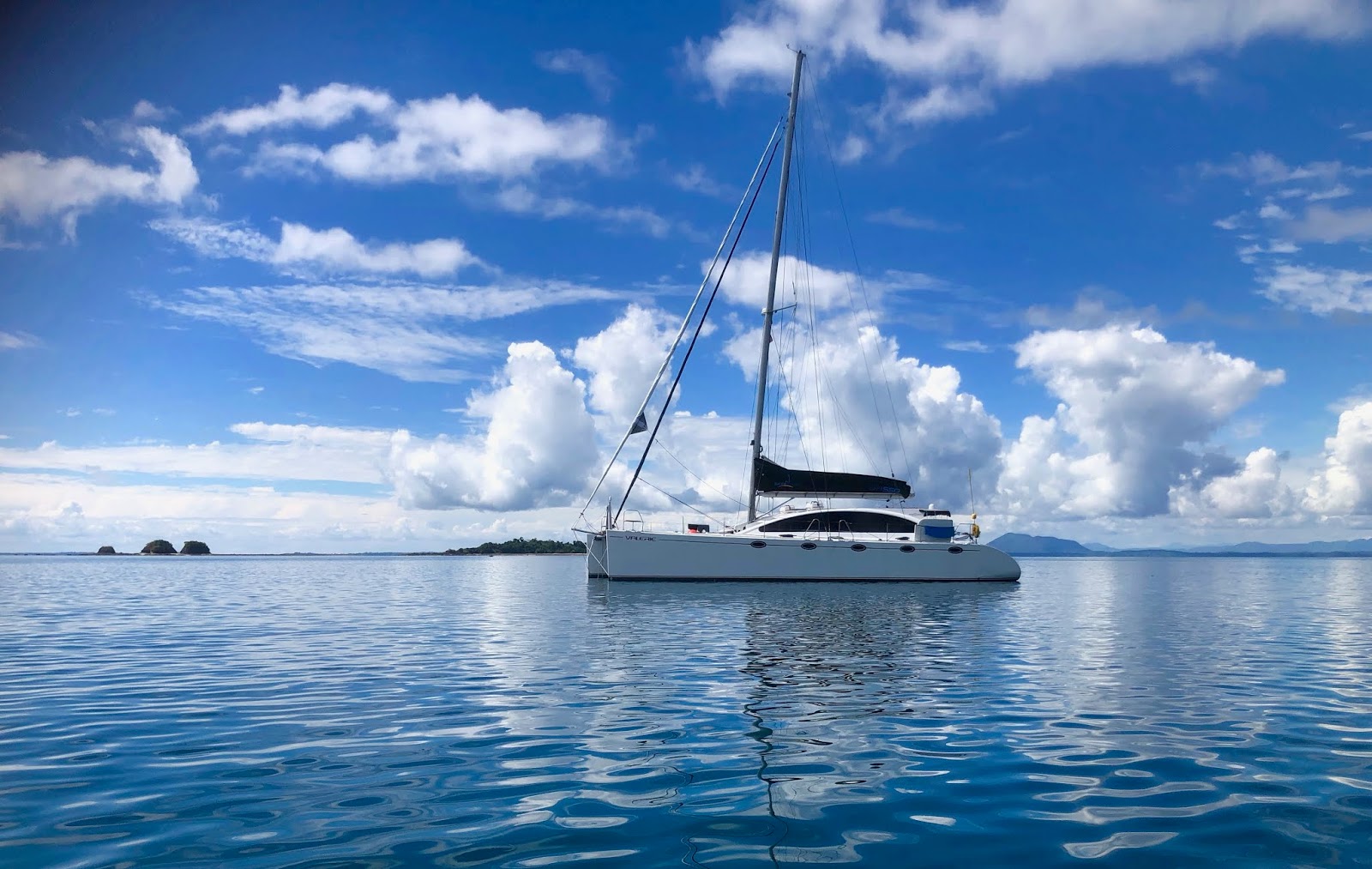
"Valerie" is the newest DH550 catamaran, launched in Durban, South Africa, a few months ago. Now she is in the Seychelles, awaiting her charter licence. Within a few weeks she should be licensed and available for crewed charter among these gorgeous Indian Ocean islands.

DH550 "Valerie" relaxing in an idyllic setting.
"Valerie" with Argie 15 as yacht tender.

A closer view.
Starboard aft cabin.
Galley on port side of saloon.
Settee on starboard side of saloon.
Inside helm and nav station.
Fast, comfortable sailing.
"Valerie" was built from a kit from Exocetus Marine in UK, who supplied a fairly comprehensive kit. It included CNC-cut components for hull, deck, bulkheads and interior joinery, as well as deck hardware, machinery, electrics and many other items.

"Valerie" will have a website in a few months. Until then I can forward any enquiries about chartering her to her owners.

To see our full range of designs go to our main website or our mobile website.

Friday, August 17, 2018

Update on 50ft Catamaran in North Carolina

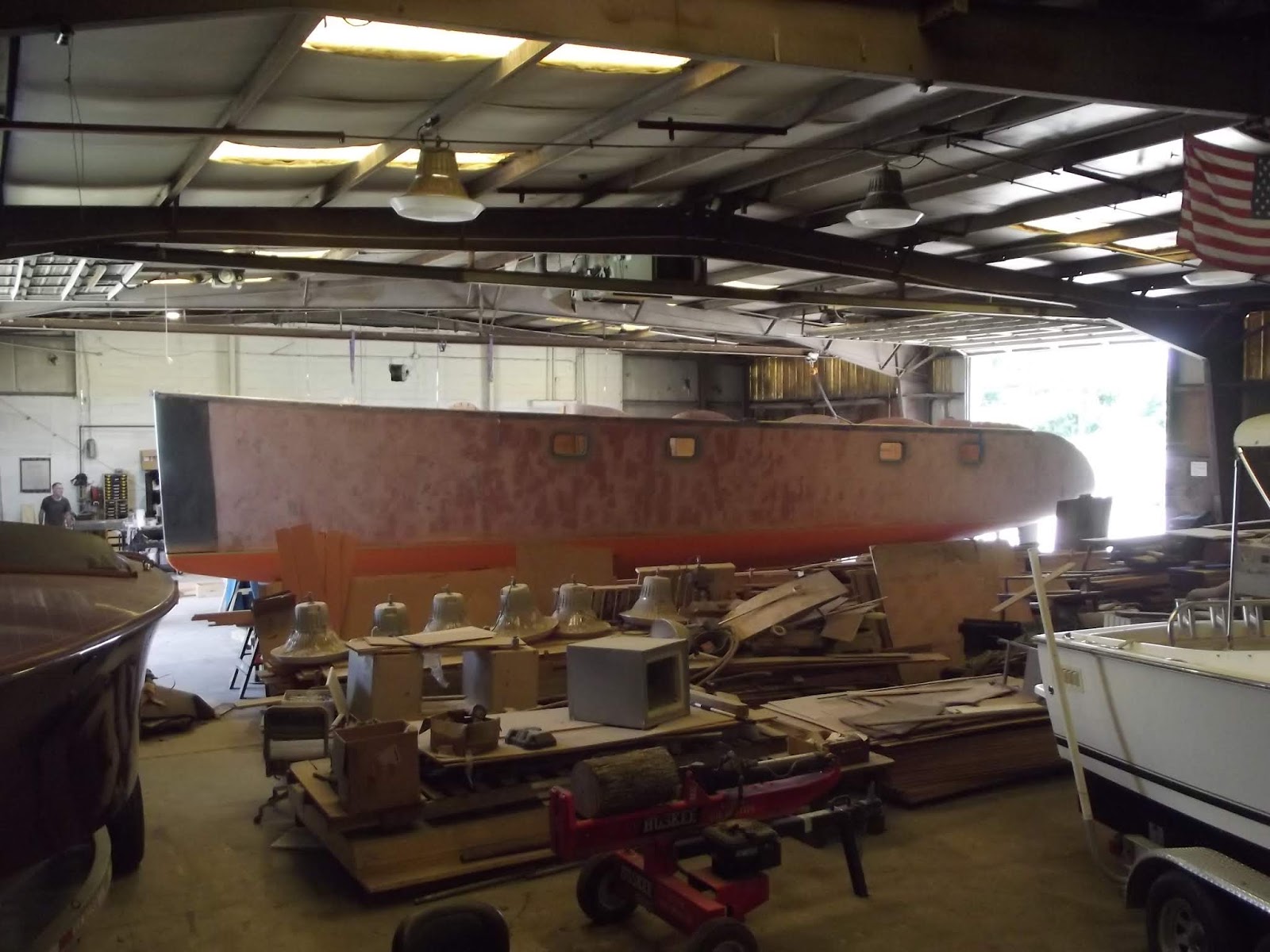
I visited the 50ft catamaran build by CRW-Con in Edenton, North Carolina last week. The first hull has been turned over and work has started on the second hull. The photos and captions tell the story.
Outboard view of the port hull. The hull has been sheathed with a layer of 1708 glass, then faired.
Inboard view of the starboard hull. The bulkhead horns projecting from the hull are for scarphing to the bridgedeck bulkheads.
Bow view. To the right is the long spar table for scarphing timbers into the hull-lengths needed to install in one piece.
Stern view, with the boarding steps taking shape. Rudder and P-bracket already installed.
Bulkheads being set up on the stocks for the starboard hull
View looking forward inside the hull.
Looking aft.
Cruising keel.
Composite chainplate being formed on plywood panel. This is the first panel that will be fitted onto the hull framing, then the others will be fitted working toward bow and stern. 
Close-up of the incomplete composite chainplate. The carbon spreads the loads down into the hull skin and structure and the shrouds are attached in the gaps with soft lashings. 
Faired-in opening for flush-fitting porthole.
Formed opening for flush-fitting escape hatch, The boxing over it is part of the 45 degree splayed panel that will connect the underside of the bridgedeck with the inboard hull side.
This boat is a modified version of out Dix 470 radius chine plywood catamaran design, stretched to 50ft. Both are sisters to the DH550.

To see our full range of designs go to our main website or our mobile website.

Wednesday, July 25, 2018

50ft Catamaran Build in North Carolina

There is a custom sister to our radius chine plywood catamarans taking shape alongside Albemarle Sound in Edenton, North Carolina. The builder is CRW-Con and the build method is composite reinforced wood construction, adapted by the builder from our radius chine plywood method. The base design is our Dix 470, expanded longitudinally to 50ft. The 470 is the second in our catamaran range that started with the DH550.

This series of photos shows construction of the first hull, which will be turned over in the next week or two.
Bulkheads and backbone set up, with stringers fitted into bulkhead slots.
First layer of radius skin fitted, foam fitted between stringers and keel structure in progress.
Plywood outer skin being fitted to sides. The opening is for the escape hatch.
Side skin completed, keel completed and glassed.
Glasswork completed.
Fairing with Awlfair.
This first boat has cruising keels and is being built on spec, with the builder seeking a customer for it. Interior configuration and finishes can be agreed between owner and builder if a buyer commits to the boat before the builder gets to a stage where he has to make those decisions. Anyone interested can email me, then I will put them in contact with the builder.

This design is not on our website. To see our range of available designs go to our main website or our mobile website.

Wednesday, November 8, 2017

Updates on the DH550 Catamarans

Last year the DH550 "Friends Forever", built by JJ Provoyer and his team, was launched in Cape Town, South Africa. For a few months "Friends Forever" day-sailed locally, then set off trans-Atlantic (South Atlantic) to cruise the Caribbean. Then back across the Atlantic again (North Atlantic this time), headed for the Med, final destination Israel. Last that I heard she was cruising France.
DH550 "Friends Forever" on Table Bay.
Easy sailing in beautiful conditions.
While "Friends Forever" was in France, she was visited by Kevin Bream of Exocetus Marine, supplier of CNC kits for the DH550, Dix 470 and the Dix 430 (currently in the design phase). Kevin did a drone fly-around video and sent some photos and a sailing report. He said "We went for a sail for one day. We were on a close haul tacking out from Cogolin past Saint Tropez, and making better speed than all the mono hulls, tacking speed was impressive as well. Overall very impressed."
"Friends Forever" sailing off St Tropez.
Back in South Africa, Sea Tribe Catamarans is building a DH550 in Durban. They are building from a kit supplied by Exocetus Marine and are moving at a fast pace. They have a series of time-lapse videos of their project on the Sea Tribe blog, showing the build process. I wrote earlier this year about the kit that was shipped to Southern Africa.
Sea Tribe turning one of the hulls of their DH550.
To see more about this and our other designs, go to our main website or our mobile website.

Friday, March 17, 2017

DH550 Kit Shipped to Southern Africa

Exocetus Yachts has shipped another kit for the DH550 sailing catamaran, this one to a builder in Southern Africa. This was more than a CNC plywood kit, it included many extras in the form of equipment and materials for the boat. The total package needed a 40ft container to keep it all together. The photos below show the order during loading. Exocetus is able to customize their kits to suit any builder, from a partial plywood CNC kit through to almost everything needed to build the boat.
"Wild Vanilla", prototype of the DH550 design. This is what the completed boat will look like.
Some of the components of the building stocks.
Pre-formed plywood panels for the hull radius.
Plywood and more plywood, CNC-cut and clearly referenced for assembly.
On top are timbers for stringers and other structural members.
Generators and engines. Behind them, porthole frames, also cut with CNC equipment.
Hardware, plumbing, electrical and other equipment.
Epoxies, tanks and more equipment
Container packed and ready to be closed and sealed.
Container loaded and heading for the ship.
To see more of this and our other designs, go to our main website or our mobile website.

Saturday, May 28, 2016

The Launching of a Big Cat

People who have never seen the process may wonder how a large catamaran is moved from the build site to the launch site, if they are not close to each other. Recently a DH550 catamaran was launched at Royal Cape Yacht Club in Cape Town, South Africa and it was built about 30 miles away in a rural location. This series of photos and videos sent to me by the builders tell the transport story nicely.

The new boat, named "Friends Forever", was built by a team headed by Jean Jaques (JJ) Provoyeur and Richard (Thirsty) Bertie. JJ Provoyear is the owner of the boat and it was built on his property. The rig is being set up this weekend and we should soon see sailing photos.
Inside the building shed, being readied for transport
The men in this photo give scale to the boat. Ready for the transporter to be backed in.
This is a big boat, so it needs specialist transport equipment to get it to the water. Cape Town is the home of a few production catamaran builders, so there are transporters available that are ideal for this job. In countries where this sort of project is more rare, large flat-bed transporters from other industries can do the job as long as the boat is properly supported.
On the transporter and moved out of the shed, with the keels still to be fitted.
Cruising keels were test-fitted before leaving the build site but only fitted at the launch site. Road clearance would have been an issue if transported with the keels in place.
With a large package like this, it is very important to research the route before the build even starts. There is no point building at a convenient location then finding that you can't get it to the water. That means finding a route that is wide enough and high enough for the boat to fit through on the trailer. It may also mean having people on the boat during transport to lift lift power cables and tree branches if they are hanging a bit low.

It also needs liaison with and permits from local authorities to move the load on the roads. It may need narrow roads to be closed to other traffic and for police escorts to help it through congested areas and along heavily trafficked highways.
Negotiating tight corners can be an issue due to the width of the load, even on roads designed for use by tractor/trailers. This boat fills up three lanes of highway, which can become interesting when negotiating tight corners. That is when it really helps to have a transporter that has steerable wheels all along its length. These can be seen in the video below, at about 0:30, where the trailer wheels all steer to move the back end sidewards when they have a very tight 90 degree corner to negotiate at a traffic light, without taking out any poles nor damaging the boat on the curbs.
After being on the move from mid-morning through to well after dark, "Friends Forever" arrived at her launch site, at Royal Cape Yacht Club. There her cruising keels were fitted and other preparations completed over the next two days before she was launched.
Crane lowering the spreader frame over the boat preparatory to fitting the slings.
In the water for the first time. The end of her first journey.
At time of writing the rig of "Friends Forever" had still to be stepped, prior to sea trials. Thanks to Esther Provoyeur for the photos and videos.

To see more of this an out other designs, visit our main website or our mobile website.
Thursday, March 10, 2016

More about Plywood Catamaran Kits

Yesterday I posted about the kits for our big catamarans developed by Exocetus Yachts in UK. There has been a lot of interest in these kits, so today I am showing more detail about what is supplied to assist the builder.

First, for those who don't know what these boats look like when complete, here is a photo of the prototype of the DH550 design, "Wild Vanilla". Building the DH550 kit will duplicate this boat and building the Dix 470 kit will produce a smaller sister of identical aesthetic. These are stunningly beautiful boats, among the prettiest catamarans currently available and they can also be built by any competent woodworker.

The DH550 "Wild Vanilla", co-designed by Dudley Dix and Phil Harvey.
Exocetus Yachts did all of the development work for the kits that they are cutting and selling. In the process they have done a tremendous amount of 3D computer modeling to define every piece of plywood that goes into the boat, including every jigsaw joint that connects one piece to another.

They have also broken down the assembly process into the many phases of work that turn a pile of plywood bits into a beautiful yacht. Each of those phases is illustrated in an interactive PDF file that can be opened in Acrobat Reader and shows the boat in a 3D image that can be manipulated on the screen in multiple ways. You are able to rotate it and zoom in to whatever level you want, to see from a broad overview right through to the details of a joint. You can also change the mode of presentation of the image, including rendered and see-through views or to see it as a perspective inked drawing. Different view choices highlight different details of the presented information.

The images below are for Phase 37, fitting the port hull bottom. The bulkheads have all been assembled, set up on the building stocks (which are also part of the kit), the backbone has been installed and the stringers fitted into their pre-cut slots in the bulkheads. This work was all shown in phases 1 to 36.
Broad overview of Phase 37
Zoomed in to see the aft bulkheads, including their jigsaw joints.
Rotated to see the other side of the structure. Here you can see the horns for bonding to the bridgedeck bulkheads.
The same view but set to show as a drawing.
Zoomed in to see details of building stocks, intersections of structure etc.
Same view but in a rendered mode. You view it in the way that will help you most.
This is a very powerful tool for the builder. He can look at any part of the structure to analyse it and understand how it goes together before or during the process. It takes a very large project and breaks it down into much more manageable and understandable stages, removing the confusion that can accompany any complex undertaking. It tells you exactly where and how to start, then guides you all the way through the process until you are ready to launch your new boat.

To see our full range of designs, please go to our main website or our mobile website.