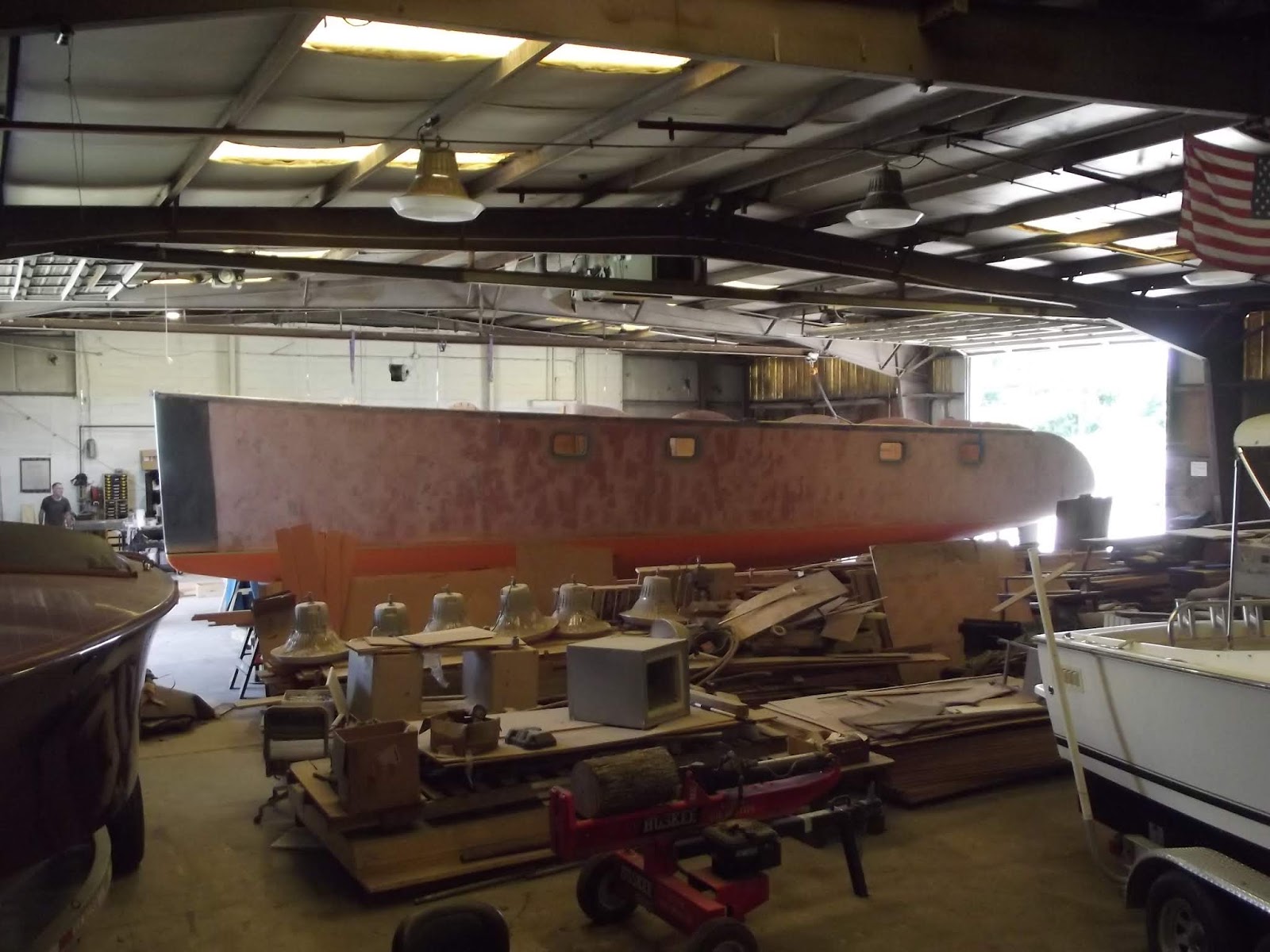
When building a boat there is a lot of effort that goes into parts of the boat that will be hidden and hopefully never seen again. Nevertheless, that hidden work has to be carefully planned and executed if there are not to be problems further into the project or, worse still, after the boat is launched.
Kevin Agee is in that stage of his 26ft Sportfisherman build. It would feel good to lay the deck and see what would seem to be another big step forward. But that would be jumping the gun. Before that can be done all of the hardware under the deck must be installed. That includes fuel, water and waste tanks, piping, valves, skin fittings, pumps, bilge blowers and the solvent-glued PVC ducting to carry hoses, electrics and engine controls.
 |
| Looking forward from the transom. PVC ducting to carry hoses, electrical cables and engine controls, installed through bulkheads and girders. The platform at the front end of the compartment in the foreground is for the batteries. The fuel tank will go into the next compartment forward and the water and waste tanks will be forward of that. The ducts that turn up against the hull sides will carry fuel filler, vent pipes and wash-down piping. |
 |
| Looking aft from the front of the cockpit. The water and waste tanks are in the foreground. The next compartment is for the fuel tank. These tank compartments have plywood bottom panels, with voids beneath that form a tunnel for bilge water to run aft to the bilge pumps. All of these compartments and the tunnel under the tanks have been thoroughly protected from moisture by glass/epoxy laminates. |
 |
| Preparations inside the outboard engine bracket for cables, engine controls and fuel lines. These compartments will be accessible through flush plastic access covers through the aft platform. |
Well-planned access to these under-deck areas is important for later removal of tanks if needed and for reaching seacocks, pumps etc. The choices are to fit commercial hatches or make them from scratch. Whichever choice is made, the hatches need to be flush, or nearly so, or people will be tripping over them and at risk of injury.
 |
| One of the hatch gutter frames for a flush hatch. The rebate around the outer edge will receive the edge of the plywood deck, with the frame finishing flush. The gutters will drain into pipes that discharge overboard. |
 |
| Bottom view of the gutter frame. The splayed face was cut on a table saw to remove unneeded timber to reduce weight. The dowels across the corners pass through the glued joints to introduce cross-grain for strength and long-term durability. The dowels will be trimmed off flush. |
 |
| Another view of a finished gutter frame |
This design is not on our website yet. To see our other designs, go to our
main website or our
mobile website.